Gillmore Apparatus Manufacturer,Supplier and Exporter in India
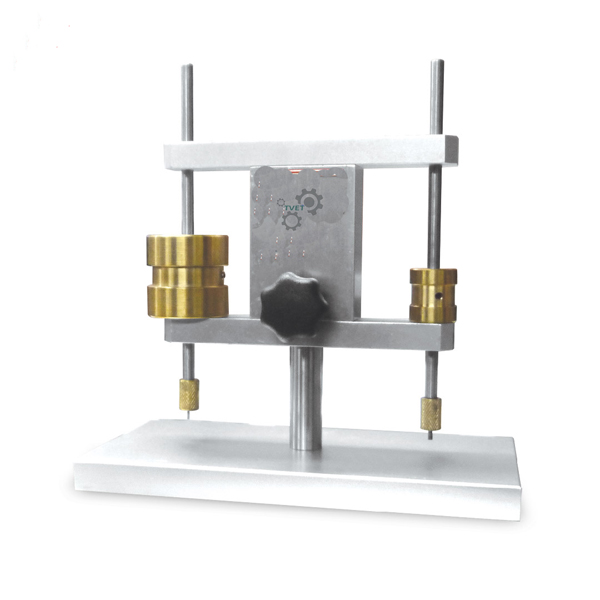
Product Code : TVT-CMTE-10384
The Gillmore Apparatus from Tvet Equipments determines the initial and final setting time of hydraulic cement paste in accordance with ASTM C266, using two calibrated needles of different weight and tip diameter to detect the onset of stiffening and the point of full initial hardening.
How It Works
A neat cement paste pat is prepared at normal consistency and placed under the apparatus. The lighter initial-set needle (113 g load, 2.12 mm tip diameter) is lowered onto the paste surface at regular intervals; initial set is recorded as the time at which this needle no longer leaves a complete circular indentation. Testing then continues with the heavier final-set needle (453.6 g load, 1.06 mm tip diameter); final set is recorded as the time at which this needle no longer leaves any visible mark on the paste surface.
Technical Specifications
| Parameter | Specification |
|---|---|
| Initial Set Needle | 113 g load, 2.12 mm tip diameter |
| Final Set Needle | 453.6 g load, 1.06 mm tip diameter |
| Overall Dimension | 200 x 100 x 200 mm |
| Approx. Weight | 2.1 kg |
| Governing Standard | ASTM C266 |
Applications
The Gillmore Apparatus is used in cement quality-control and R&D laboratories to determine initial and final setting times of hydraulic cement paste to ASTM C266 — an alternative to the Vicat needle approach (IS 4031 Part 5 / EN 196-3) often specified where ASTM-referenced testing regimes apply, including cement manufacturing plants supplying export markets and laboratories following US-influenced specifications.
Related Products & Category
Part of Tvet Equipments' Cement & Mortar Testing Equipments range, complementing the Blaine Air Permeability Apparatus used for cement fineness testing. See also Dropping Ball Apparatus.
Frequently Asked Questions
Q1. How is the Gillmore method different from the Vicat needle method?
Both determine cement setting time, but the Gillmore method (ASTM C266) uses two weighted needles of different tip diameters applied by hand to detect surface indentation, while the Vicat method (IS 4031 Part 5 / EN 196-3) uses a single spring-loaded needle that penetrates a fixed distance into the paste.
Q2. What is recorded as the initial and final setting time?
Initial set is the elapsed time from mixing until the light needle (113 g, 2.12 mm) ceases to leave a complete indentation; final set is the elapsed time until the heavy needle (453.6 g, 1.06 mm) leaves no visible mark at all.
Q3. Is the Gillmore Apparatus suitable for both OPC and blended cements?
Yes, ASTM C266 covers hydraulic cements generally, including ordinary portland and blended cements, provided the paste is prepared at normal consistency per the applicable standard test method.
Request a Quote
For a price on the Gillmore Apparatus, send us the quantity, the standard or test method it is for and where it should be delivered. Send an enquiry to Tvet Equipments.
Last updated: September 2026

.jpg)